
Your First System
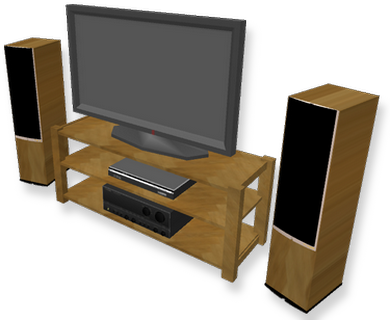 In the HiFi heyday of the 1970s and 1980s almost everyone had a stereo system in their living room or recreation room. A rack of components and a pair of rather large speakers were considered to be part of the furniture and often they were the dominant feature of the room. Back then we enjoyed well produced music on vinyl and tape and rarely was the quality of the equipment questioned. We simply used our systems to enjoy the music.
But, now with so many options for listening the living room stereo has faded from popularity and unfortunately it has taken the quality of home audio with it.
If you've been listening to your music on ear buds, watching movies with your TV speakers or listening to silly little bluetooth speakers, setting up a proper home audio system will almost certainly take the experience to a whole new level. You will discover the simple joy of relaxing and letting realistic music flow over you and you'll discover the full impact of movie sound effects.
Very few people want to return to their old ways once they hear a good stereo setup.
Before you start
If you've been curious or even begun your shopping experience, it probably took about 8 minutes before you ran into some pretty wild stuff.While it is entirely possible to build a reasonable home audio setup without spending wheelbarrows full of money, that is not likely to be the dominant message you will get from the audiophile community. They will ambitiously push you to spend ridiculous amounts of money on exotic equipment, dedicated listening rooms, acoustic treatments, magic cables and wildly expensive accessories. They will aggressively try to convince you that unless you do things their way your system will never be good enough.

This horrible situation began in the mid-1970s with the introduction of "Monster Cable". Their sales pitch was that fancy speaker wires would improve the sound of any system, giving you better bass, clearer highs, better presence and more detail. Many audiophiles took the bait and began seriously comparing wires and telling others how wonderful they were based solely on subjective listening impressions.
On the opposite side, a group that relies almost entirely on measurements emerged. They bought into a numbers game, spending big money to get better specifications, improvements they will never hear due to the limits of human hearing.
As the divisions deepened, an entire industry formed around this newfound market for exotic equipment and many companies showed up, hoping to cash in on one side or the other. Most of what they sell gives you nothing in return. They peddle do-nothing products using pseudo-science and nonsense at very high prices, hoping to take huge profits from gullible enthusiasts.
Over time, the animosity has grown in the audiophile community. A once cordial group degenerated into two opposing camps; subjectivists and objectivists, ears versus measurements. The ongoing conflict and gate keeping now routinely sets off flame wars in social media and sometimes in person.
Sad to say, both sides of this silliness are wrong. The magic cables and boxes will make no more difference than the stellar specifications. In my experience, the exotic stuff does not sound significantly better than more reasonably priced equipment and some of it is actually worse.
The rabbit hole
The problem with all this is that fussing with cables and equipment takes away from musical enjoyment. You are no longer listening to your music, now you are listening to your stereo. You are no longer enjoying your music, now you are fussing over your system. You will always be nit picking, seeking perfection, missing the fun. It's a very destructive and expensive rabbit hole that you should never want to crawl into.From the beginning, your best bet is to outright ignore the audiophile hype and pressure. Stay with reasonably priced equipment and standard accessories. Build a nice system that lets you actually enjoy your music and movies.
The rule of adequacy
Building a very nice system is a mix of common sense and a little bit of skill. It's not hard to do. In fact, with the current state of audio technology it's actually hard to put together a bad system.At the root of the decision making process is the concept of Adequacy: When is something good enough?

In physics the most common analogy is to note that: "once you have a chain strong enough to tow your car, using a bigger chain does not make it any easier to tow." That is; so long as your chain doesn't break, you gain very little by going bigger.
In home audio, the equivalent is to notice that once you have a device that will accurately reproduce the audio signals, using a bigger or more expensive version will bring little or no improvement.
The line is drawn in the definition of High Fidelity itself. A device is considered to be "HiFi" when it can adequately reproduce music and movie sound at reasonable levels without significant distortion, colouration or loss. From a specifications standpoint this means that if a device has a frequency response that is flat from 20hz to 20khz, produces less than 0.1% distortion before overload and has a dynamic range better than vinyl records (70db). It is going to be acoustically transparent and more than adequate for home audio use.
While the numbers might not impress, the line they draw certainly does. The really cheap stuff fails the test by being poorly made, but almost every medium priced piece of equipment currently available more than meets the requirement.
Of course you are free to go beyond the adequacy threshold. Nothing stops you from building bigger or more expensive systems but you should be aware that, if you do, you will be playing in the realm of luxury where over-built devices are only marginally better than the mid-price equipment. In fact, the more you spend the worse this ratio gets. You can easily end up spending 10 times as much for a 1% improvement.
Thus, the smart money is on the mid-price products from reputable manufacturers.
The truth
The rather obvious truth is that no reputable manufacturer of audio equipment is going to sabotage their own business by producing equipment that does not work properly without the add-on cables and do-dads the audiophile community thrives on. They are not going to give you an under-rated power cord or knowingly design devices that are unstable. They would not last very long if they did.Trying to second guess the engineers is a fools game. Almost always you can simply hook everything up and enjoy your new system for many worry free years.
Summing up
The take-away is that tinkering with stereo equipment makes a lousy hobby.Treat your system as what it is; a purchase.
The real hobby here is your music and movies. It's really about the joy of listening, managing your collection, and the hunt for new recordings.
Be smart, buy reasonably priced equipment for the whole family to enjoy, then use it to listen to your music and movies, as intended.